こんにちは、Atsuです。
この記事は、私がTOEFL iBTで114点を取得した際の体験レポです。
私が社会人1年目にTOEFL114点を取った際の受験体験を、以下の3つのフェーズに分けてお話ししています。
- ① 試験準備
- ② TOEFL受験
- ③ 結果分析
今回は、「②TOEFL受験」と「③結果分析」を同時に行なっていきます。
まだ【試験準備編】を見ていない方は、先にそちらを読むのがおすすめです。
 Nao
Nao
試験結果
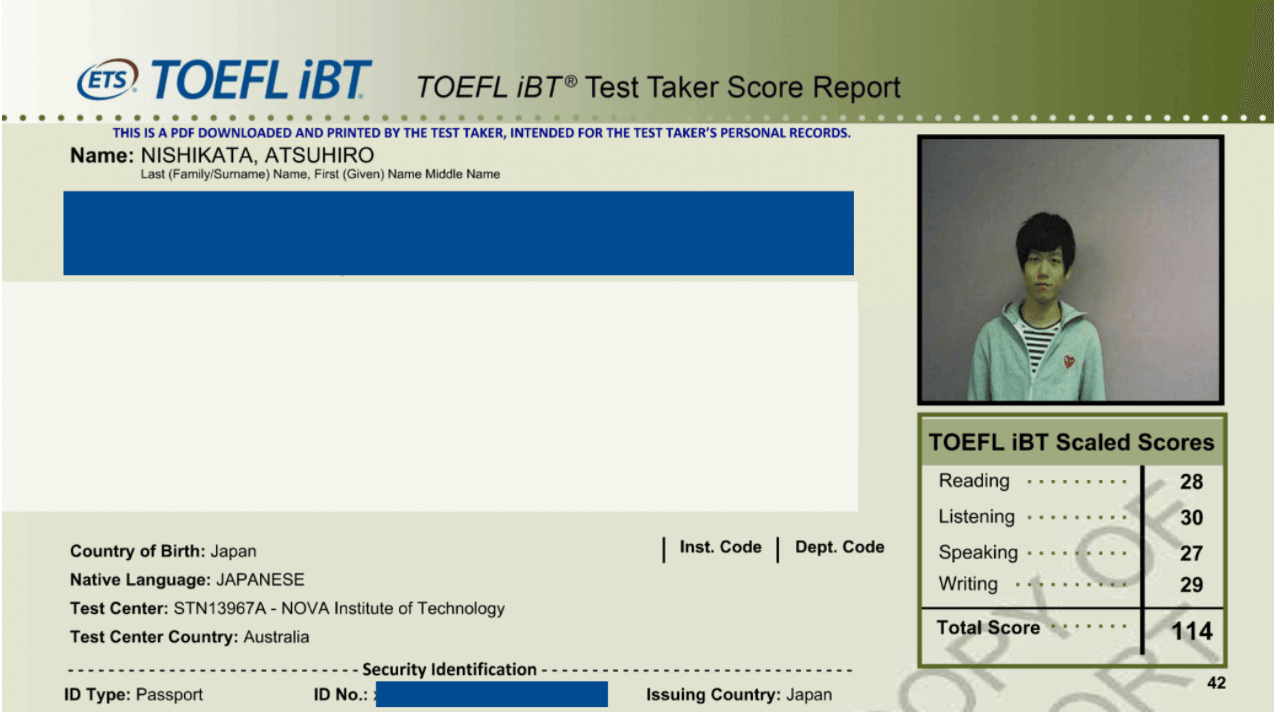
試験結果は以下のようになりました。
【結果:114点(約95%)】
- リーディング:28点
- リスニング:30点
- スピーキング:27点
- ライティング:29点
個人的には118〜120点を目標にしていたので、残念な結果となりました。
ここからは、実際に受験した時の様子と、結果を見ての原因分析をあわせてお話しします。
今回の受験はオーストラリア・メルボルンでの受験ということ以外は、日本で以前受験した際(2010年)と比較して大きな違いはありませんでした。
指紋認証やボディチェックもなく(日本ではあるようですが)、来た順に入場して試験開始、という流れでした。
リーディング:甘く見て痛い目を見た
まずはリーディングから開始。やはり、あのTOEFL独特のフォントには目が慣れるまで時間がかかります。
私だけかもしれませんが、最初のパッセージがどうしても読みにくく感じます。
リーディング自体の難易度は、TPOや公式問題集とほぼ同じで、5分ほど残して終了しました。
結果は満点だと思いきや、「28点」でした。自信があったわりに取れていませんでした。
リーディングはほぼ勉強していなかったので、甘く見て痛い目を見たという感じでしょうか。

英語力と読解力を本気で鍛えたい方へ
公式LINEに登録していただいた方に、学校では習わないがネイティブがよく使う表現を自然に散りばめたオリジナル教材「Distinction Reading Pack」を無料で配布しています。リーディング力を伸ばしたい方はぜひチェックしてみてください。
リスニング:「メモを取らない戦略」がハマる
次にリスニングセクション。今回の方針は【準備編】でお話しした通り、「メモを一切取らない」というものです。
メモを取るとどうしても注意がそちらに向き、内容が入ってこないという現象が少なくとも私には起きたため、本番でもこの戦略を採用しました。
また最後にダミーが出ました。「でっかい花びらで臭いにおいを放つ花の話」です。
確か5年前にも同じものが出ました。こんなに何度も皆が知っているダミーを出して、一体ETSは何をしたいのかと考えながらも、しっかり休みました(選択は適当)。
結果は「30点(満点)」でした。模試でメモを取っていた時は27〜28点が多かったので、メモを取らない戦略が私には非常にマッチしたようです。
意味取りの練習にもなると思います。TOEIC等で聞き取りを仕上げて、TOEFLで意味取りのスキルを上げていく、という考え方も良いかもしれませんね。
スピーキング:要約のスキル不足を実感
スピーキングは恥ずかしながら、パート1でミスをしてしまいました。
「学生はどうやったら友達が沢山作れるか」というような質問で、クラブ活動を提案したのですが、「部活帰りに友達と話しながら帰っていて、そうすると絆があーだこーだ」と言っているうちに残り3秒。
結局、「そんな感じです。」のようなWrap upで終了してしまいました。
改めて、IELTSのように長々と話しても良いわけではなく、短い時間内に要約する技術が重要な試験だなと感じました。これは練習あるのみですね。
確かパート4とパート5でも、言いすぎ・言い忘れがあり減点されたと思っています。
結果は「27点」でした。おそらく上述の各パートでの減点によるものだと分析しています。
どちらかというと、要約スキルや、話す時に体系的に言うべきことを追えるノートテイキングなど、「試験での技術面(立ち回り)」が今回のスコアに影響した要因として大きかったのかなと感じています。
ライティング:Task1で聞き逃しがあったと予測
ライティングは特にテンプレートを作らず、自由に書きました。
どの程度のレベルのライティングをしたかを例示するために、練習の中で書いた文章をサンプルとして載せましたので参考にしてください。
ライティング内容
To begin with, money acts as a precursor to providing professors with incentives to perform better. If professors are given higher salaries, they will be more encouraged to take responsibilities in delivering well-developed lectures. For example, when I was in my first year at Tokyo University, which is one of the most famous universities in Japan, I was so disappointed by the quality of classes lead by professors. They used the same slides and materials every year and did not even change the content of exams. Although this made it significantly easy for students to achieve good results on the exams, they did not study a lot as they knew that they could pass the exams. Since I was a student who always wanted to get challenged by teachers and work hard, this fact smashed my expectation I had when I enrolled in the university. However, when I was in my second year, the university decided to increase salaries paid to its professors by approximately no less than 10 percent as the university was aware that low salaries were causing serious problems in the quality of sessions. Surprisingly, many of the professors changed their teaching styles and made their lectures more interactive and challenging. This example evidently portrays how remunerations can positively affect the quality of education.
Furthermore, gratifying professors with high salaries paves the way for sustainable operations of universities. For example, Hokkai University, which was one of the local universities in my hometown, merged with a different university in 2002 due to a low morale that university professors had because of low salaries. The university was in a healthy financial condition thanks to a huge amount of grants from the local government, but it did not use that money to motivate teachers. Since all the professors at the university were aware of that, their satisfaction level declined year after year and many started moving to a different college. Consequently, the university finally ended up having only two professors left. This resulted in the merger and definitely this was not a favorable outcome for either the university or students. Therefore, there is no doubt that paying high salaries to professors is the key to a successful operation of universities and also quality education.
In summary, the university should spend a lot of money on salaries that university professors receive. Not only will this motivate the professors but also this allows universities to have lower risk of losing the professors. Thus, we should encourage universities not to stint on professors' salaries to ensure that quality education is made available to students.
ちなみに「ライティングのアイディアのコツ」で話した通り、作り話もがっつり入っています(笑)
 Atsu
Atsu
結果は「29点」でした。おそらくTask2は満点だと思います。Task1で自分では気づいていませんが、聞き逃した部分があったと分析しています。
Task1はノートテイキングをしないと対処できないタスクですが、前述の通りノートテイキングはリスニングの集中力を下げてしまうため難しいです。
ぜひまた練習してチャレンジしてみたいなと思いました。
おわり
以上、「私のTOEFL受験体験記【受験・結果分析編】」でした。
留学目的でTOEFLを受験される方がほとんどだと思うので、満点を目指して受ける方はあまり多くないかもしれません。そういう意味では参考にならない部分もあると思う一方で、高得点を目指す受験者の体験記は日本語だとまだ少ないのかなとも思います。
TOEFLを受験される方もされない方も、今回の記事でなにかしらのベネフィットを受け取ってくれたら嬉しいです。
TOEFL100点を取るための勉強法・おすすめ教材についてはこちらにまとめていますので、興味のある方はぜひ。
 Atsu
Atsu